
… As NSC Defends Tariff Adjustments, ICTN Delay
The Nigerian Shippers’ Council (NSC) and the Nigeria Revenue Service (NRS) have urged shipping companies and terminal operators to grant waivers to importers and clearing agents affected by delays linked to the implementation of the National Single Window (NSW) at the nation’s seaports.
The appeal was made during a stakeholders’ engagement held at the NSC headquarters in Lagos, bringing together representatives of the Council, NRS, NSW Secretariat, terminal operators, and shipping companies to review the progress and challenges of the newly introduced system.
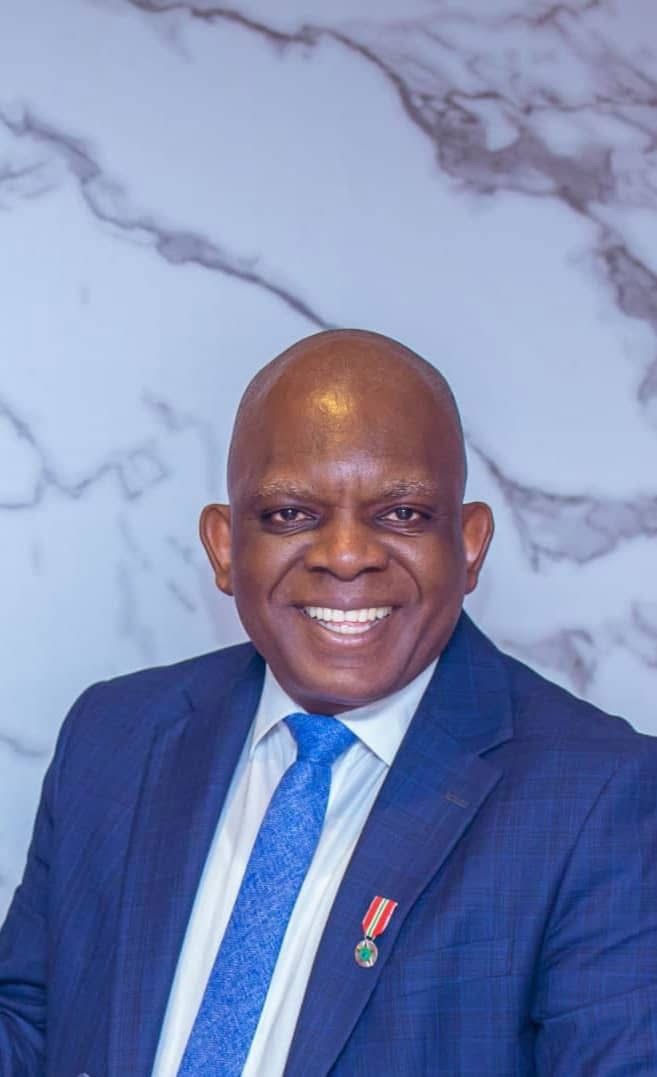
Speaking at the meeting, the Executive Secretary and Chief Executive Officer of Nigerian Shippers’ Council (NSC), Dr. Akutah Pius, MON, acknowledged that while the National Single Window initiative marks a major milestone for the maritime industry, its rollout has been accompanied by initial operational challenges impacting cargo clearance timelines.
He noted that the system, which went live on 27th March 2026, represents a long-awaited reform aimed at streamlining port processes, enhancing transparency, and improving efficiency across the sector.
According to him, “the National Single Window is a significant development that has brought optimism to stakeholders. However, like any major reform, it comes with teething problems that must be collectively addressed to ensure seamless implementation.”
Akutah explained that the engagement was convened at the instance of the NSW Secretariat to assess ongoing implementation efforts and find practical solutions to emerging bottlenecks, particularly those affecting cargo movement and clearance.
“We now know that things are taking shape, gradually taking shape, and it’s for the benefit of all of us. We are here to look at, yet again, the implementation and some of the challenges that have arisen that we need to tackle together as a family, to ensure that we move on smoothly with the implementation stage,” the ES stated.
He stressed the need for collaboration among all stakeholders, describing the port ecosystem as a “family” that must work together to overcome transitional challenges and sustain the gains of the reform.
Also speaking, the Chairman of the Nigeria Revenue Service, Dr. Zach Adedeji, urged shipping companies and terminal operators to show understanding by granting waivers on demurrage and storage charges incurred during the delay period.
Adedeji said such relief measures would cushion the financial burden on importers and clearing agents who have been adversely affected by system-related disruptions beyond their control.
“Anywhere in the world, when there are changes, there are hitches, and when there are things not part of business, people discuss for solutions, and I want us to work together to resolve it.”
“There have been some single window induced delays, and that has led to delays in the clearance of cargoes. That is why we are here to seek your support while we are passing through this initial stage, we can get your support,” he stated.
“But, Shipping Companies and Terminal operators have said if truly the delays are related to single window, they have internal process of discounting, giving the waiver, and beyond that, they are there to support us on all what is needed to make this program a successful program, because they all see the benefits of that,” Adedeji stated.
He added that new initiatives or policies often come with initial challenges, which necessitated the meeting with terminal operators and shipping companies.
The NSC boss further called on concessionaires and terminal operators to accelerate the automation of their operations, noting that seamless integration with the National Single Window is critical to achieving the intended efficiency gains.
“With the advent of the National Single Window, the need for full automation of systems has become even more crucial. Stakeholders must fast-track their digital integration to align with the platform and ensure smoother processes,” he said.
Industry stakeholders at the meeting acknowledged the benefits of the Single Window initiative but expressed concerns over delays and technical issues that have slowed cargo clearance since its rollout.
The National Single Window is expected to serve as a unified digital platform for processing trade-related documentation, reducing human interface, cutting costs, and improving Nigeria’s ease of doing business.
Despite the current challenges, stakeholders expressed confidence that, with sustained collaboration, system upgrades, and temporary relief measures such as waivers, the initiative would ultimately deliver long-term benefits to the maritime sector and the broader economy.
Responding, shipping companies said the National Single Window is a project that would benefit everyone but should not be used to encourage inefficiencies.
Speaking, the General Manager, Port and Terminal Multi-Services Limited (PTML), Tunde Keshinro, said there are importers who are efficient, adding that cases with genuine need for waivers would be considered.
“It’s a national project that will benefit everyone. There are importers that are efficient, and those with genuine needs would be attended to, and we shouldn’t encourage inefficiencies,” he said.
In a related development, the NSC boss defended the Council’s recent tariff decisions, regulatory interventions, and the delayed implementation of the International Cargo Tracking Note (ICTN), insisting that all actions taken by the agency are guided strictly by law, due process, and extensive stakeholder consultations rather than external pressure or inconsistency in policy direction.
Speaking in an extensive interview, Akutah explained that tariff regulation is a core statutory responsibility of the Council under Sections 5 and 6 of the Port Economic Regulations 2025, stressing that the NSC acted within its legal mandate in approving adjustments after years of sustained pressure from service providers who had repeatedly demanded significant increases due to rising operational costs.
He noted that for more than two and a half years, no tariff review had been implemented despite inflationary trends, increasing cost of operations, and multiple requests from industry players, some of which ranged between 150 percent and 300 percent increases, which the Council had to carefully moderate in order to prevent wider economic disruption.
He maintained that tariff adjustment in the maritime sector cannot be treated as a profit-driven exercise but rather as part of broader sectoral development and investment sustainability, adding that any decision must take into account key macroeconomic indicators such as inflation, GDP performance, and the potential impact on national trade.
According to him, the Council deliberately adopted a cautious approach given that over 80 percent of Nigeria’s trade is dependent on maritime transport, warning that excessive tariff hikes could have immediate ripple effects across the economy.
On concerns that shipping companies were introducing exploitative charges and that the regulator was merely reacting to crises, he dismissed the allegation, stating that the Council did not act arbitrarily but approved a structured adjustment framework of about 35 percent, which was designed as a flexible band rather than a fixed rate.
He explained that operators were allowed to implement within an approved range, typically between 10 and 20 percent depending on their operational realities, while cautioning that any over-implementation would distort competitiveness in the sector.
Reacting to suggestions that recent disputes in the industry signaled instability or regulatory failure, Akutah clarified that the tensions were not systemic but largely isolated to a disagreement between Mediterranean Shipping Company (MSC) and its stakeholders.
He said other shipping companies successfully concluded their stakeholder engagements without incident, adding that the situation with MSC stemmed from a breakdown in agreement during consultations rather than any regulatory lapse. He disclosed that he personally intervened during a protest at MSC premises to de-escalate tensions and encourage dialogue, noting that regulatory engagement must always remain the preferred route for resolving disputes in the sector.
Addressing concerns about regulatory interference, he warned against what he described as regulatory capture, arguing that undue external pressure on a statutory regulator could undermine transparency and distort the balance required to protect both shippers and service providers. He emphasized that the Council’s role is to maintain equilibrium in the industry, not to favour one side over another, stressing that the collapse of any segment of the value chain would ultimately affect national trade.
On the International Cargo Tracking Note (ICTN), Akutah acknowledged delays in implementation but attributed them to a complex web of legal disputes, court cases, and historical inconsistencies surrounding the project. He explained that the Council is currently working with the Ministry of Justice to resolve outstanding litigation involving some stakeholders before full rollout can proceed, noting that the objective is to ensure a seamless and legally sound implementation that will not be subject to further suspension.
He reaffirmed that ICTN remains critical to improving cargo security, enhancing tracking efficiency, and safeguarding national revenue, but stressed that the Council must ensure all legal bottlenecks are resolved to avoid operational setbacks.