
By Tunde Ojudun
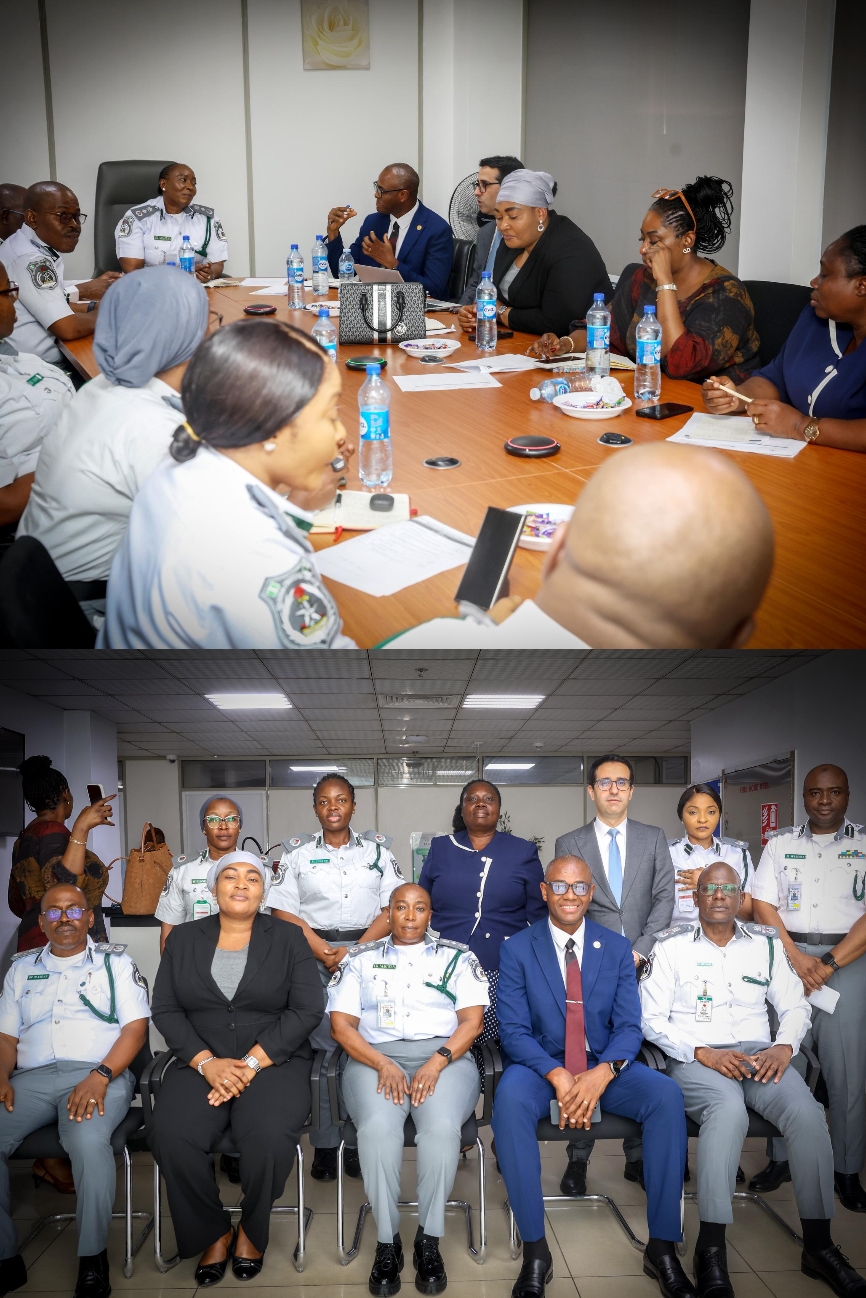
On 23 March 2026, the Nigeria Customs Service (NCS) hosted a strategic meeting with the African Continental Free Trade Area (AfCFTA) Secretariat at its Headquarters in Maitama, Abuja. The session centered on advancing the Simplified Trade Regime (STR), designed to ease cross-border trade for small-scale traders.
Representing the Comptroller-General of Customs, Deputy Comptroller-General (DCG) Caroline Niagwan, who oversees Tariff and Trade, reaffirmed NCS’s commitment to supporting Micro, Small, and Medium Enterprises (MSMEs). She emphasized that the Service aims to make trade “easier, more transparent, and inclusive,” while ensuring compliance with national and regional regulations.
Pedro Estevao, head of the AfCFTA delegation, highlighted Nigeria’s designation as the pilot country for STR in West Africa, noting its pivotal role as the region’s largest market in driving inclusive trade and economic growth.
During the engagement, NCS presented a draft Standard Operating Procedure (SOP) for STR implementation in Nigeria. The SOP outlined simplified customs processes for informal cross-border trade, passenger baggage, and low-value e-commerce, supported by digital declaration systems and risk-based controls.
Complementing this, AfCFTA consultant Nabil Zibani shared the proposed continental STR framework, stressing the importance of accessible, transparent systems that enable MSMEs to participate fully in regional trade.
Discussions revealed strong alignment between the NCS draft SOP and AfCFTA’s framework, particularly in simplifying documentation and procedures, leveraging digital platforms for declarations and clearance, adopting de minimis thresholds for low-value trade, and promoting inclusive trade opportunities for women and MSMEs
Both parties agreed to continue technical collaboration to refine strategies, address operational challenges, and ensure harmonization between national and continental frameworks.
This engagement marks a significant step toward positioning Nigeria as a regional leader in STR implementation, reinforcing NCS’s role in facilitating legitimate trade, strengthening integration, and driving inclusive economic growth across Africa.