
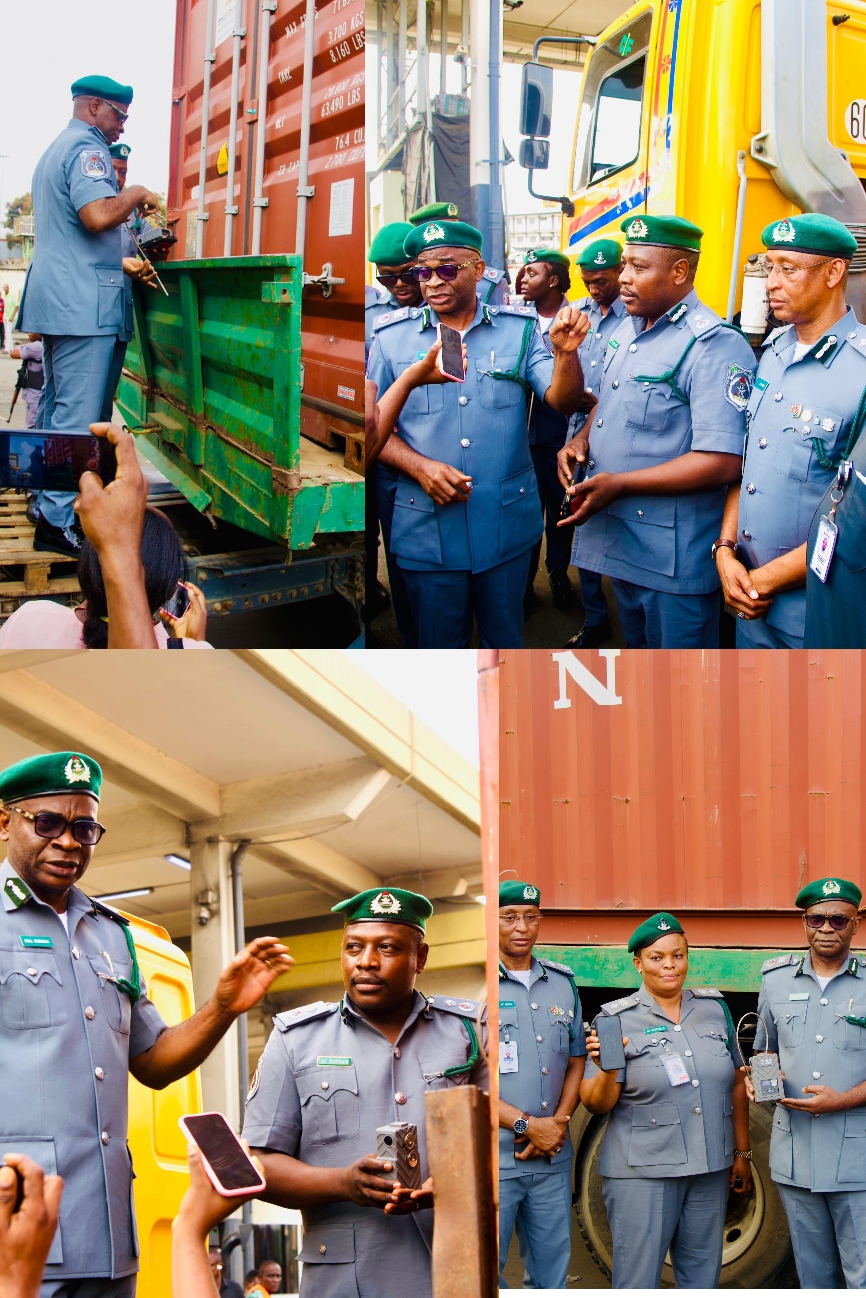

The Apapa Area Command of the Nigeria Customs Service (NCS) has officially launched the Electronic Cargo Tracking System (ECTS), a cutting-edge digital solution designed to enhance national security, streamline trade operations, and boost revenue generation across Nigeria’s ports.
The pilot phase of the ECTS was successfully executed with a container bound for the Kano/Jigawa Area Command, marking the first live deployment of the system. The technology enables real-time tracking of cargo from departure to final destination using electronic seals and handheld devices, ensuring transparency, preventing tampering, and eliminating diversion risks.
Speaking at the launch, Comptroller Emmanuel Oshoba, Customs Area Controller of Apapa Command, described the initiative as a transformative step in customs modernization. He emphasized that Apapa Command is serving as the national pilot hub, and the system will significantly reduce reliance on physical escorts by enabling remote monitoring.
Comptroller Oshoba also praised Comptroller General Bashir Adewale Adeniyi, Chairperson of the World Customs Organization (WCO), for his visionary leadership and commitment to automation and innovation in Nigeria’s customs operations.
Deputy Comptroller Aondona Christopher Fanyam, Head of B’Odogwu Implementation, outlined the system’s secure unlocking protocols as remote access via central control, local unlocking through authorized handheld devices, and physical unlocking cards at designated destinations.
These layered safeguards ensure only authorized personnel can access cargo, reinforcing integrity and protecting revenue.
Chief Superintendent of Customs Rosemary Ebele Wenceslas, Team Leader of the training unit, confirmed that 12 officers have been trained for the pilot phase. Drawn from the Rapid Response Unit (FOU Zone A Ikeja) and Apapa Enforcement Team, these officers have undergone intensive instruction and are fully equipped to operate the ECTS in line with established Standard Operating Procedures (SOPs).
This launch marks a significant milestone in Nigeria’s journey toward smarter, more secure, and efficient port operations.